
How to Price Woodworking for Profit: The Formula, Worked Examples and How to Raise Your Prices
Most woodworkers price by gut feel and quietly work for less than minimum wage. Here is a simple formula that covers materials, your time, your shop and a real profit.
Price woodwork with a formula, not a feeling: (materials × 1.2 for waste) + (hours × your hourly rate) + overhead per piece, then add a 15–30% profit margin. Check the result against what similar handmade work sells for in your market. If buyers never push back on price, you are too cheap — raise prices 10–15% at a time.
- Use one formula for every piece: materials + labour + overhead + profit
- Pay yourself an hourly rate that covers skill and taxes — not minimum wage
- Overhead (tools, power, insurance, fees) is a real cost spread across every piece
- Profit is separate from your wage; it funds new tools and slow months
- Compare with the market, then price on value, not just cost
On this page (9 sections)
- The pricing formula
- Step 1: Know your materials cost
- Step 2: Set an hourly rate you can live on
- Step 3: Spread your overhead
- Worked example 1: A walnut cutting board
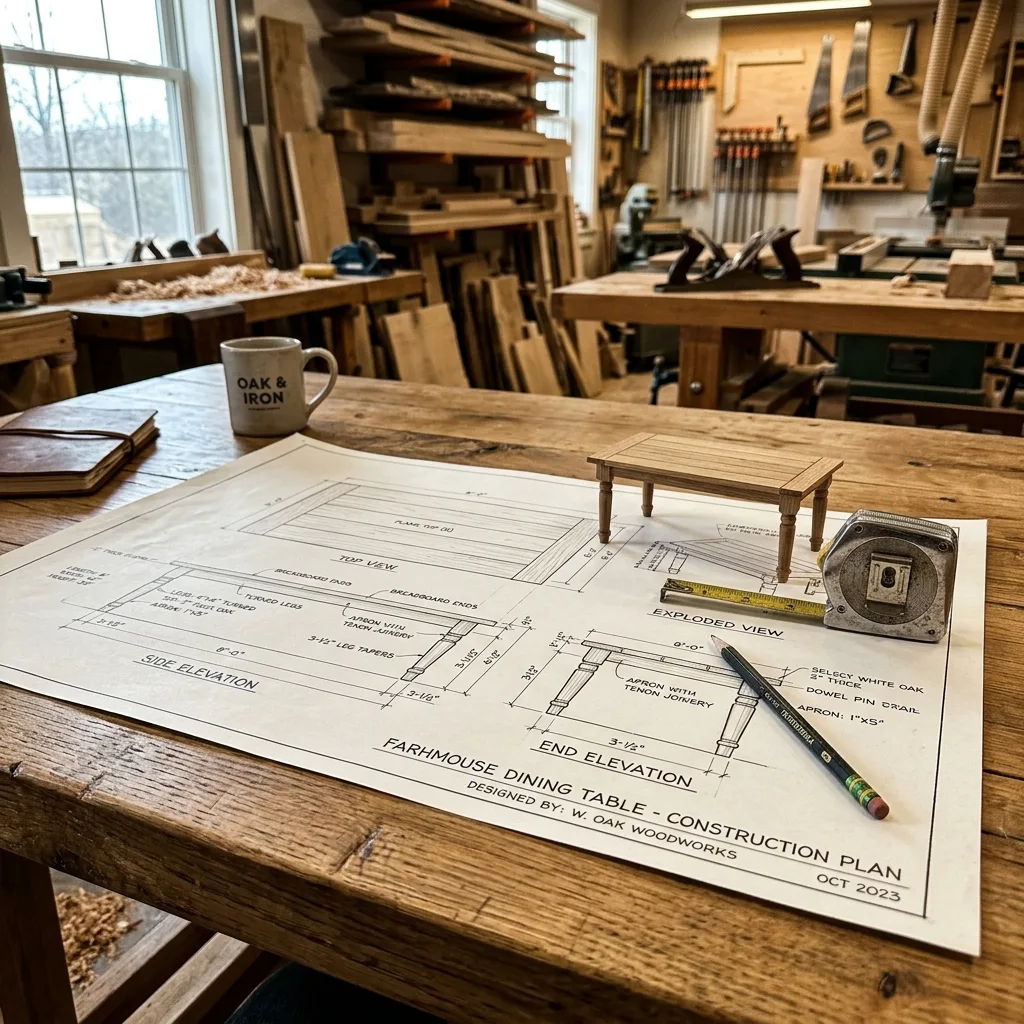
- Worked example 2: A commissioned dining table
- Step 4: Check the market — then price on value
- Common pricing mistakes
- When and how to raise your prices
Ask a room of hobby woodworkers how they price their work and most will say the same thing: “I add up the wood and double it.” Then they spend thirty hours on a dining table and earn less per hour than a teenager stacking shelves. Pricing is not about guessing what someone might pay. It is about knowing exactly what each piece costs you — and making sure the price covers it, with something left over.
This guide gives you one formula that works for a cutting board or a commissioned bed, two worked examples, and the market checks that stop you from pricing yourself out of sales.
The pricing formula
Price = Materials + Labour + Overhead + Profit
| Part | What goes in it | How to calculate |
|---|---|---|
| Materials | Lumber, sheet goods, glue, hardware, finish, abrasives | Actual cost × 1.2 to cover waste and offcuts |
| Labour | Every hour: milling, joinery, sanding, finishing, packing | Hours × your hourly rate |
| Overhead | Tool wear, blades, power, insurance, website, fees, rent | Yearly overhead ÷ pieces per year (or an hourly shop rate) |
| Profit | Money for the business — new tools, slow months, growth | 15–30% on top of the total |
Labour and profit are not the same thing. Your hourly rate pays you for your work. Profit pays the business so it can buy a better planer next year without coming out of your wages.
Step 1: Know your materials cost
Keep every receipt and log the board feet you use. Use the board foot calculator to price lumber orders accurately and the cut list optimizer to see how many boards a project really needs. Add 20% for defects, offcuts and the board you split. Don’t forget the small things: glue, sandpaper, finish, felt pads and hardware add up fast.
Step 2: Set an hourly rate you can live on
Work backwards from what you need to earn:
- Decide on a yearly income target from the business.
- Add self-employment taxes and any benefits you now pay yourself.
- Estimate billable hours — not every hour in the shop. Admin, photography, sales, cleaning and sharpening are real work that nobody pays for directly. Many makers can bill only 50–70% of their working hours.
- Divide the income target by billable hours. That is your rate.
Track time with a timer for three or four projects. Almost everyone underestimates sanding and finishing by half. Your real numbers make every future quote better.
Step 3: Spread your overhead
Add up a year of shop costs: blades and bits, abrasives, electricity, dust collection filters, insurance, website and payment fees, booth fees, vehicle costs and the slow replacement of tools. Divide by the number of pieces you make, or by billable hours to get a shop rate you add per hour. Ignoring overhead is the most common reason busy makers still lose money.
Worked example 1: A walnut cutting board
| Item | Amount |
|---|---|
| Walnut and maple, glue, oil (× 1.2) | $30 |
| Labour: 2 hours × $35 | $70 |
| Overhead: 2 hours × $8 shop rate | $16 |
| Subtotal | $116 |
| Profit at 20% | $23 |
| Price | about $139 |
If that feels high for your market, the answer is rarely “charge less”. It is “make them faster”: batch-build six boards at once and the labour per board drops dramatically.
Worked example 2: A commissioned dining table
| Item | Amount |
|---|---|
| White oak, hardware, finish (× 1.2) | $900 |
| Labour: 45 hours × $45 | $2,025 |
| Overhead: 45 hours × $10 shop rate | $450 |
| Design and client meetings: 4 hours × $45 | $180 |
| Subtotal | $3,555 |
| Profit at 20% | $711 |
| Price | about $4,270 |
Take a deposit before you buy lumber. Our guide to managing client commissions covers contracts, deposits and change requests.
Step 4: Check the market — then price on value
Your formula gives you the floor: the lowest price at which the piece is worth making. Now look at the ceiling. Search for comparable handmade work online and at local galleries and craft fairs. Compare like with like — solid hardwood, joinery, finish quality and size.
- Formula price below market: raise it toward the market. You are leaving money on the table.
- Formula price above market: reduce your hours (batching, jigs, simpler designs), find better-paying buyers, or stop making that item.
- Price on value: custom sizing, rare species, a story and your reputation are worth more than the sum of the parts.
Common pricing mistakes
- Charging only for “shop time”. Quoting, buying lumber, photography and delivery are all labour.
- Pricing friends-and-family style. Your public price should be the same for everyone; give a gift if you want to, not a discount you resent.
- Forgetting selling costs. Marketplace fees, payment fees and shipping materials come straight out of your margin. See selling online vs locally for how fees compare.
- Never raising prices. Lumber and costs rise every year; your prices should too.
When and how to raise your prices
If almost every quote is accepted without a pause, you are too cheap. Raise prices by 10–15%, watch what happens for a few months, and repeat. Good photos raise perceived value too — see our photography guide for woodworkers — and a clear brand helps buyers trust the price; read branding your woodworking shop.
Questions woodworkers ask
What hourly rate should a woodworker charge?
Enough to cover a fair wage plus self-employment taxes and unpaid time spent on admin, sales and design. Many part-time makers start around $25–$40 an hour and skilled furniture makers charge considerably more. Work out what you need to earn per year and divide by the hours you can realistically bill.
Should I charge for design time?
Yes. Custom work involves drawings, client meetings and revisions. Either add a design fee, include design hours in the quote, or take a non-refundable deposit that covers them.
How do I price when I am still slow at something?
Price on what an efficient maker would take, not on your learning curve. Track your hours, but quote the time a practiced version of you would need — the extra hours are the cost of learning.
Is it OK to charge less than big-box furniture?
Handmade solid-wood furniture is a different product from mass-produced flat-pack. Compete on quality, materials, custom sizing and story — not on price. Underpricing makes buyers doubt the quality.
How much deposit should I take on commissions?
A common approach is 30–50% up front, enough to cover materials and protect your time if the client walks away, with the balance due on completion before delivery.
Plans for your next project


Michael Wood
Founder of WoodCraft Corner. Fifteen years at the bench, hundreds of projects, and still learning something new every week.
0 comments