
The First 5 Power Tools Every Beginner Woodworker Should Buy (and 3 to Skip)
Skip the shiny stuff. These five tools — bought in this order — will build your first bookshelf, your first table and your confidence, without filling the garage.
Buy a cordless drill/driver first, then a circular saw with a straightedge guide, a random orbit sander, a pocket-hole jig and a compact router. Those five build almost any beginner furniture project. Skip the table saw, jointer and planer until your projects demand them.
- A drill, circular saw and sander cover 80% of beginner work
- A pocket-hole jig gives you strong joints on day one — no years of practice needed
- Buy hearing protection and a respirator with your first saw, not after
- The table saw is a second-year tool: big, expensive and the least forgiving
On this page (13 sections)
- How we chose these tools
- 1. A cordless drill/driver: the spoon of the workshop
- 2. A circular saw and a straightedge: a table saw on training wheels
- 3. A random orbit sander: where “homemade” becomes “handmade”
- 4. A pocket-hole jig: real joinery from day one
- 5. A compact router: the tool that adds polish
- The 3 tools to skip (for now)
- Don’t forget the supporting cast
- Your first project with this kit
- A sensible budget, stage by stage
Walk into a big-box store as a new woodworker and the aisle looks like a candy shop: lasers, cordless everything, a table saw with a price tag like a used car. Here’s the truth from someone who has filled (and emptied) a lot of shops: your first tools should be the ones that build your first ten projects, not the ones that look best on the wall.
Think of it like stocking a kitchen. You don’t start with a sous-vide machine; you start with a good knife, a solid pan and a cutting board. Master those and you can cook almost anything. The five tools below are your knife, pan and board — bought in the order you’ll actually need them.
-
1
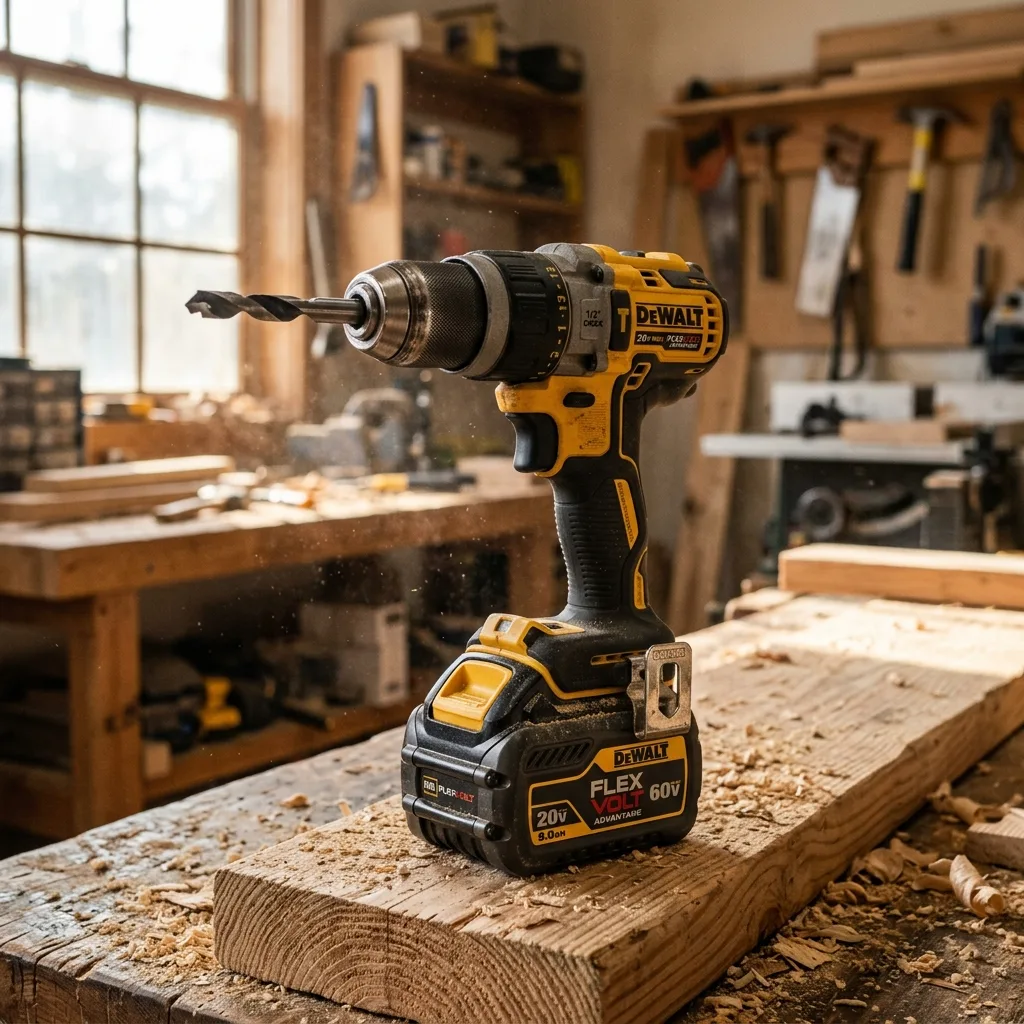 Top Pick DeWalt 20V Max Cordless Drill $99.00Check price
 -
2
SKIL Best budget saw SKIL 15 Amp 7-1/4" Circular SawCheck price
-
3
DeWalt Best first sander DeWalt 5-inch Random Orbit SanderCheck price
-
4
Kreg Best pocket-hole jig Kreg 720PRO Pocket-Hole JigCheck price
-
5
Bosch Best first router Bosch Colt Palm RouterCheck price
How we chose these tools
Every tool on this list had to meet four criteria:
- Versatility — it earns its place on most projects, not one.
- Forgiveness — a beginner can get a good result in the first week.
- Safety — your hands stay well away from the cutting edge in normal use.
- Upgrade path — it stays useful after you own a full shop.
1. A cordless drill/driver: the spoon of the workshop
You’ll reach for a drill more than any other tool, the same way you reach for a spoon more than any other utensil. It drills pilot holes, drives screws, powers your pocket-hole jig and — with a sanding drum — even shapes curves.
What matters: a 20V-class battery platform, an adjustable clutch so you don’t sink screws too deep, and two batteries so you never wait on a charger. Brushless motors run longer per charge, but a good brushed drill is plenty to start.
Level up: once you’re comfortable, add an impact driver on the same battery platform for long screws, and keep the drill for drilling. Two tools, zero bit swapping.
2. A circular saw and a straightedge: a table saw on training wheels
A circular saw cuts the big stuff — full sheets of plywood, long boards — that a beginner can’t safely wrestle across a table saw. Clamp a straight edge to the workpiece, run the saw’s base against it, and you get a cut straight enough for cabinets.
Here’s the trick most new woodworkers miss: the blade matters more than the saw. Swap the stock blade for a finer one with more teeth for plywood, and the splintered edges disappear.
Support both sides of the cut so the board can’t pinch the blade, keep the cord behind you, and let the blade stop before you lift the saw. Read our saw safety guide before your first cut.
Pro note: make a dedicated cutting guide from a strip of plywood: a straight fence glued to a wider base, then trim the base with your saw. Its edge now shows exactly where the blade will cut — no measuring offsets ever again. We cover it in our jigs guide.
3. A random orbit sander: where “homemade” becomes “handmade”
Sanding is the difference between furniture that looks DIY and furniture people ask about. A random orbit sander spins and oscillates at the same time, so it doesn’t leave the swirly scratches of a cheap palm sander.
Work through the grits in order — 80 for shaping, 120, then 180 or 220 before finish — and never skip more than one grit. Our sanding guide shows the full sequence.
4. A pocket-hole jig: real joinery from day one
Traditional joints like the mortise and tenon take practice to cut well. A pocket-hole jig lets you drill an angled hole and drive a screw that pulls two boards tight — strong enough for face frames, cabinets, bookshelves and even tables. It’s the fastest way from a pile of lumber to something you can sit on.
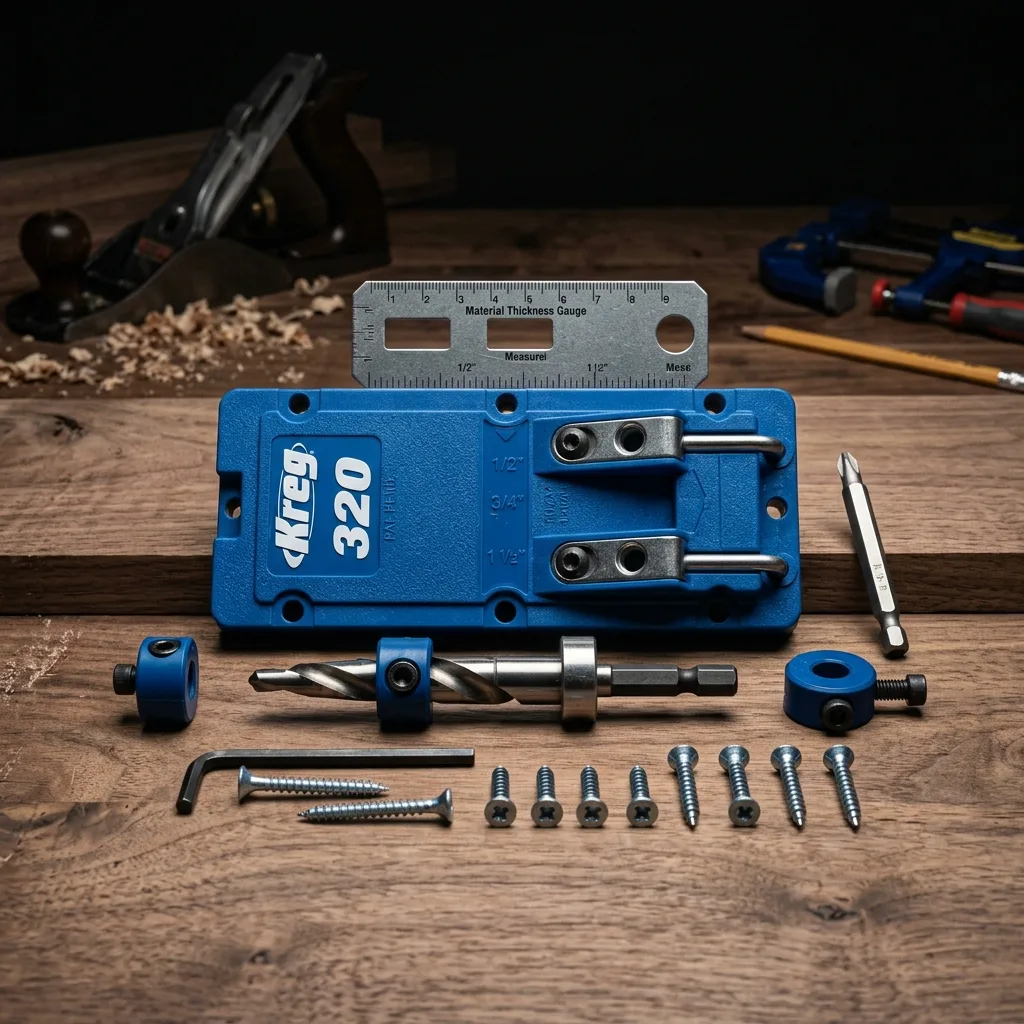
On a tight budget? The smaller Kreg Pocket Hole Jig 320 makes the same joint; it just needs a separate clamp. Not sure pocket holes are for you? We compare them head-to-head in Pocket Hole vs. Biscuit Joiner.
5. A compact router: the tool that adds polish
If the sander is the difference between DIY and handmade, the router is the difference between handmade and heirloom. A small one-handed router rounds over sharp edges, cuts decorative profiles, trims edging flush and mortises hinges.
Start with three bits: a 1/4" roundover, a chamfer and a flush-trim. Those three will transform every edge you build.
Ready for more? Our router buyer’s guide explains fixed vs. plunge bases and when to step up to a full-size router.
The 3 tools to skip (for now)
The table saw
It’s the heart of a mature shop — but it’s also the most expensive, the most space-hungry and the least forgiving tool you can buy. Build a dozen projects with a circular saw first. When you find yourself ripping lots of narrow strips, you’ll know it’s time.
The jointer and planer
These flatten and thickness rough lumber. Until you’re buying rough boards from a local sawmill, buy lumber that’s already surfaced on four sides (labelled S4S) and spend the money on wood instead.
Gadget tools
Laser engravers, CNC machines and specialty jigs are fun — but they’re accessories to woodworking, not the foundation. Buy them once you know what you love to build.
Don’t forget the supporting cast
The tools nobody photographs are the ones that keep you building: hearing protection (a circular saw is loud enough to damage hearing over time), a real respirator for fine sanding dust, good glue and a handful of clamps.
Your first project with this kit
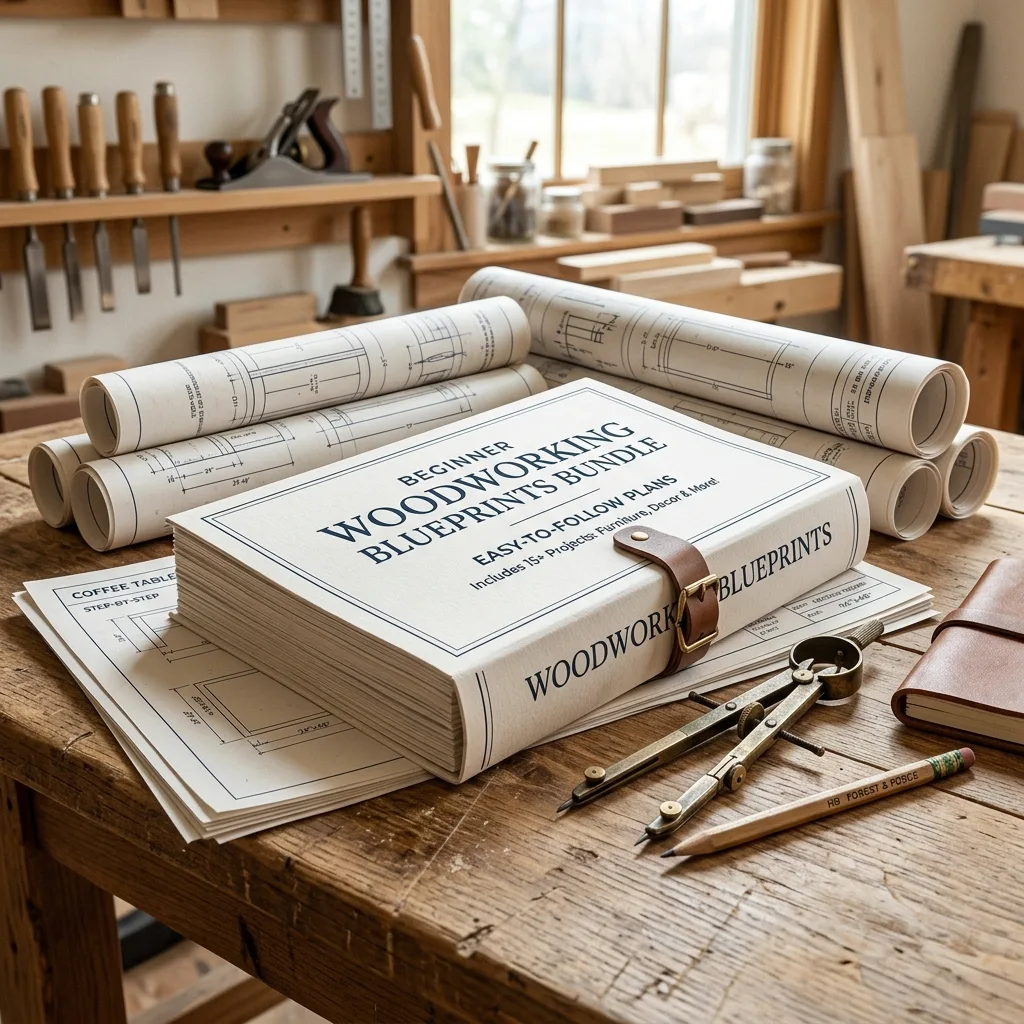
With these five tools you can build a bookshelf, a coffee table, a workbench and every project in our scrap wood projects list. Want a guided start? Our beginner plan bundle walks you through five builds that use exactly this kit.
A sensible budget, stage by stage
| Stage | Buy | What it unlocks |
|---|---|---|
| Month 1 | Drill/driver, circular saw, hearing & eye protection | Cutting and assembling simple boxes, shelves and shop projects |
| Month 2 | Random orbit sander, respirator, glue, clamps | A finish good enough to give as a gift |
| Month 3 | Pocket-hole jig, compact router and three bits | Furniture: tables, cabinets, bookcases with finished edges |
That’s the whole secret. Buy the tool when the project in front of you needs it, learn it well, and let the next project tell you what to buy next.
Questions woodworkers ask
What is the single most important power tool for a beginner?
A cordless drill/driver. You will use it on every project — drilling, driving screws, pocket holes and even sanding with accessories. Buy a kit with two batteries so one is always charging.
Can I build furniture without a table saw?
Yes. A circular saw guided by a straight edge cuts plywood and boards square enough for cabinets, shelves and tables. Many professional cabinet installers work this way on site.
Corded or cordless?
Cordless for the drill. For the circular saw and sander, corded tools give more power for less money, and they never die halfway through a cut.
Should I buy a cheap tool set to start?
Usually no. Combo kits stuffed with tools you do not need cost more than buying the right five one at a time. Buy each tool when your next project calls for it.
What about hand tools?
Add a combination square, a tape measure, a few clamps and a block plane early. They are cheap, quiet and teach you accuracy that makes every power tool cut better.
Gear from this guide

Michael Wood
Founder of WoodCraft Corner. Fifteen years at the bench, hundreds of projects, and still learning something new every week.
0 comments